Open Finance
How to test an FDX API with one customer and two accounts
A practical FDX data-provider pilot for banks. Test transaction mapping, account permissions, revocation and operational evidence.
A bank can get a successful API response in a demo while leaving the hardest question unanswered. When a customer withdraws consent, can the bank show that the recipient’s next request was denied and explain exactly what happened?
An FDX pilot can answer that question using one synthetic customer, two accounts and one test recipient. Give it a narrow goal. Prove that the provider can return accurate data for one shared account and enforce that permission throughout its lifecycle.
Agree on the contract before writing the adapter
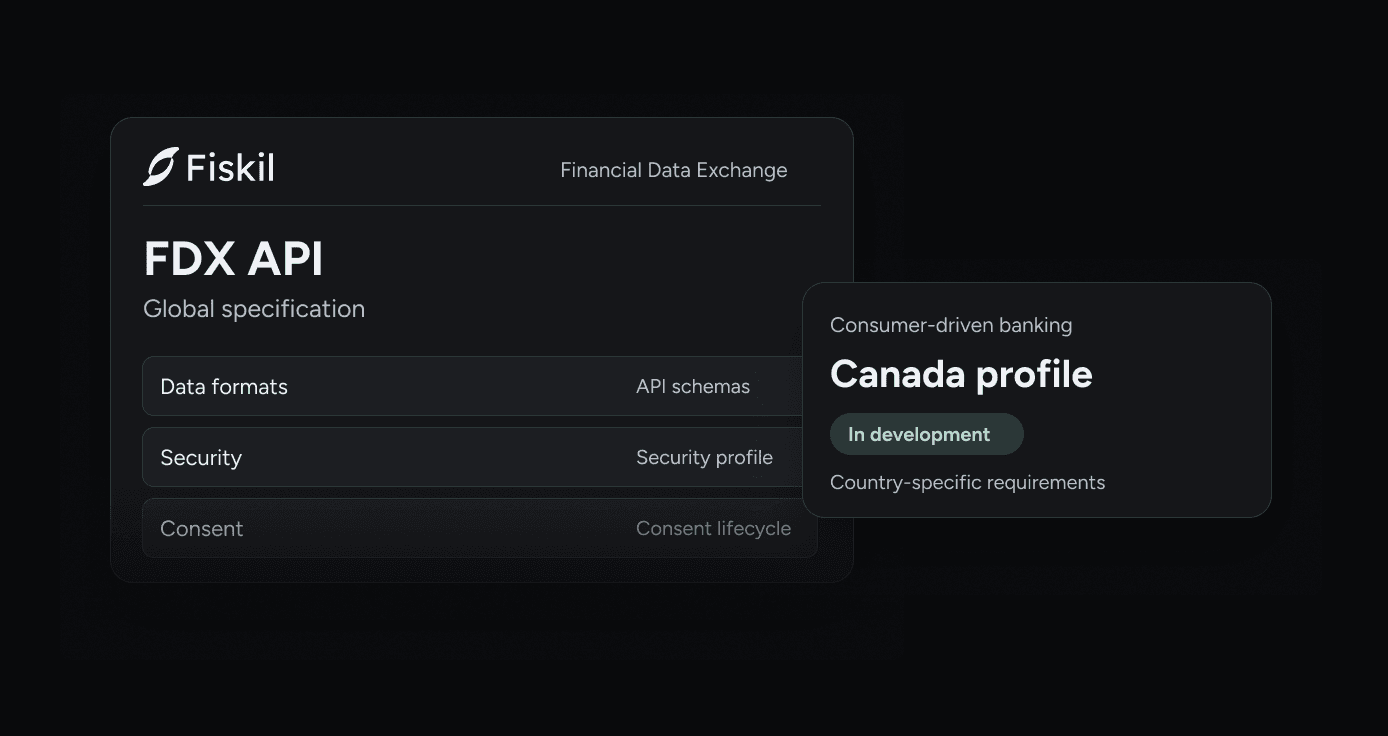
Record the exact FDX specification version, the use case and the countries you’re evaluating. FDX publishes separate specification and companion materials that cover areas including core data, consent, security and certification. Pick the materials that apply to your pilot and record the assumptions behind the choice. For Canada, the country profile is still being finalised. FDX specifications and companion documents · FDX Canada
Agree on the minimum data first. For this exercise, that might include an account identifier, currency, a timestamped balance and one page of booked transactions. Map every value to an owner and a source system. Decide how you’ll represent absent fields, which transaction date you’ll expose and how you’ll handle a reversal. Capture those decisions in the fixture so a reviewer can tell a mapping defect from a source-data problem.
Test with two accounts and one grant
Give the synthetic customer a chequing account and a savings account. Authorise the test recipient to read the chequing account. Load a booked purchase and a reversal into the fixture, then run these checks through the same provider interface the recipient will integrate with.
| Scenario | What to verify |
|---|---|
| First read | The response includes the selected chequing account and its expected currency, balance timestamp and transaction values. |
| Account scope | The savings account is absent from the account list. A separate request for its data is denied. |
| Customer withdraws access | A new request after revocation is denied, including when the test recipient presents an access token issued before revocation. |
| Source unavailable | The recipient gets the response defined for the failure. Operations can identify the failed dependency using the request’s correlation ID. |
For each case, retain the expected result, the actual result, the relevant timestamps and the correlation ID. Use identifiers defined for the pilot and keep access tokens and transaction payloads out of the logs. Have a support colleague reconstruct the withdrawal from the evidence before you call it done.
Put the findings in the delivery plan
The useful output is a small set of gaps with owners. Core banking might own the transaction mapping. Identity might own how withdrawal reaches the API. Operations might own the evidence trail. Record which decisions can carry into production and which depend on the applicable profile and formal conformance process.
If you’re working out where your systems end and a managed provider interface begins, explore Fiskil’s FDX Data Provider.