Are Banks Today Leveraging AI Technologies?
Explore how banks leverage AI for efficiency, customer experience, and security, transforming traditional models into digital-first experiences.
Artificial Intelligence (AI) is revolutionising the banking industry, bringing operational efficiency, improved customer experience, and enhanced security. As the demand for digital solutions grows, banks are turning to AI to streamline processes, reduce costs, and make data-driven decisions. This article explores how modern financial institutions are leveraging AI technologies and what it means for the future of banking.
The Current Use of AI in Banking
AI technologies are being adopted at an unprecedented rate across various sectors of the banking industry. From customer service chatbots to sophisticated fraud detection systems, AI is helping banks automate routine tasks, personalise services, and mitigate risks. This adoption is transforming traditional banking models into digital-first experiences, making it essential for banks to integrate AI into their operations to remain competitive.
1. Customer Service and Chatbots

One of the most visible applications of AI in banking is customer service. Chatbots powered by natural language processing (NLP) are increasingly being used to handle routine queries, provide account information, and even initiate transactions.
Key Benefits: Chatbots operate 24/7, reduce wait times, and can handle a large volume of queries simultaneously. They are also trained to respond consistently, providing customers with a reliable and efficient interaction experience.
Example: Many Australian banks, such as the Commonwealth Bank, have deployed chatbots like "Ceba" to help customers with tasks such as checking account balances, paying bills, and managing their finances. Ceba uses conversational AI to understand user intent and provide personalised responses, helping improve the overall customer experience.
Learn more about AI's role in customer service.
2. Fraud Detection and Risk Management
AI has become a crucial tool for banks in combating fraud and managing risks. Machine learning algorithms analyse vast amounts of transactional data to detect unusual patterns that could indicate fraudulent activities. This advanced technology helps banks identify suspicious behaviour that may be overlooked by traditional systems.
Key Benefits: AI enhances fraud detection by identifying anomalies in real time, allowing banks to take preventative action before significant damage occurs. Moreover, it reduces false positives, which can disrupt legitimate transactions and frustrate customers. This real-time detection capability is crucial for adhering to regulations like the Anti-Money Laundering (AML) guidelines and the Bank Secrecy Act (BSA).
Example: AI systems are capable of flagging suspicious activities such as multiple high-value transactions within a short timeframe or transactions originating from high-risk locations, enabling banks to block fraudulent transfers before they are completed.
Read more about AI in fraud detection.
3. Personalised Customer Experiences
Personalisation is a key driver of customer satisfaction, and AI is enabling banks to deliver tailored experiences based on individual preferences and behaviours. By analysing customer data, banks can create personalised offers, recommend financial products, and anticipate client needs. This level of customisation improves engagement and fosters loyalty.
Key Benefits: Personalised banking enhances customer engagement, improves satisfaction, and increases loyalty. It also enables banks to cross-sell and upsell products more effectively, resulting in increased revenue.
Example: AI tools can recommend relevant investment products, offer personalised savings plans based on a customer’s spending habits, and even suggest budget optimisation tips tailored to the user’s financial goals.
Explore more on how AI personalisation works.
4. Automating Back-Office Processes
Banks are using AI to automate back-office functions such as data entry, document verification, and compliance monitoring. This automation reduces human error, speeds up processing times, and allows staff to focus on more strategic activities.
Key Benefits: Automating routine tasks can reduce operational costs by up to 30%, improve accuracy, and ensure compliance with regulatory standards. AI-driven automation can also handle large volumes of data, making it a scalable solution for growing organisations.
Example: Robotic Process Automation (RPA) is used in compliance reporting to automatically generate and submit regulatory documents, reducing the risk of human error and ensuring adherence to complex regulatory requirements.
Discover more about AI’s impact on back-office operations.
Challenges Banks Face When Implementing AI
While AI offers significant benefits, integrating it into banking operations is not without its challenges. Banks need to address several key issues to ensure that AI delivers its full potential.
1. Data Privacy and Security
AI systems require large datasets to function effectively, often involving sensitive customer information. Ensuring the security of this data is paramount, as breaches can lead to regulatory penalties and loss of customer trust.
- Solution: Banks should implement robust data governance frameworks and encryption protocols to protect customer data during collection, storage, and analysis. This can involve using secure data access methods, anonymisation techniques, and adherence to regulations such as GDPR and the California Consumer Privacy Act (CCPA).
2. Compliance with Regulations
AI models must comply with complex regulatory standards such as the General Data Protection Regulation (GDPR) and the Bank Secrecy Act (BSA). Failure to meet these standards can result in heavy fines and reputational damage.
Incorporating AI into existing compliance frameworks, using RegTech solutions, and maintaining transparency in AI decision-making can help banks meet their regulatory obligations.
Solution: Incorporating AI into existing compliance frameworks, using RegTech solutions, and maintaining transparency in AI decision-making can help banks meet their regulatory obligations.
3. Algorithmic Bias
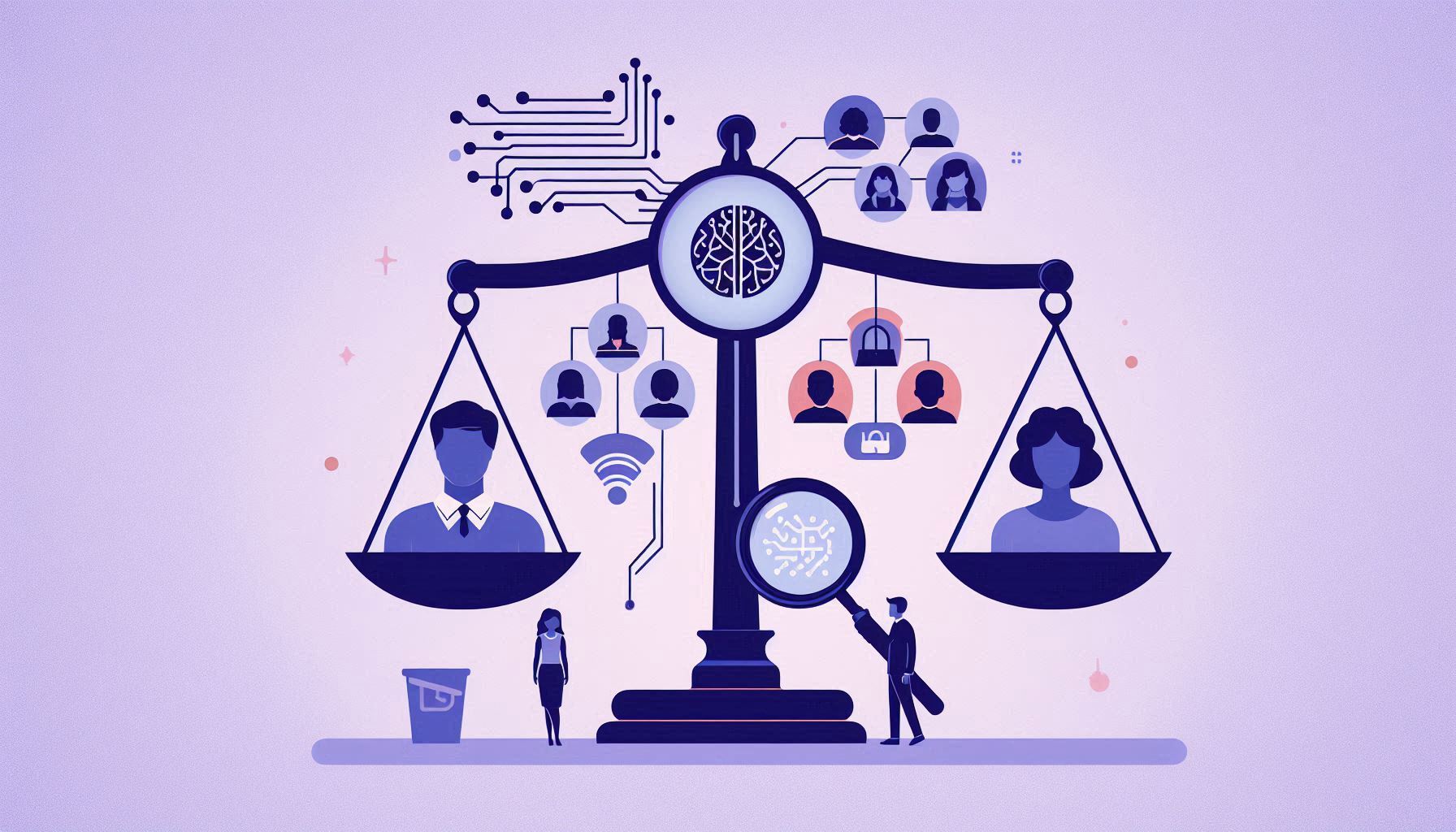
If not properly managed, AI systems can perpetuate biases present in historical data, leading to unfair lending practices or discriminatory treatment of certain groups.
Solution: Regularly audit AI models for biases, use diverse datasets, and incorporate fairness metrics to ensure unbiased outcomes. This approach helps ensure that AI-driven decisions are ethical and compliant.
4. Integration with Legacy Systems
Many banks still rely on legacy systems, making it difficult to integrate advanced AI solutions seamlessly. These older systems lack the flexibility required for modern AI technologies, leading to compatibility issues and higher costs.
Solution: Modernising infrastructure, adopting cloud-based platforms, and using middleware solutions to bridge the gap between legacy and AI systems can facilitate smoother integration and improved efficiency.
5. Talent and Expertise Shortage
Successfully implementing AI requires specialised expertise in data science, machine learning, and finance—skills that are currently in high demand but short supply.
Solution: To address this, banks can invest in upskilling their workforce, partnering with academic institutions, and collaborating with fintech firms that specialise in AI-driven solutions.
How Banks Can Leverage AI More Effectively
To maximise the benefits of AI, banks must adopt a strategic approach that aligns AI initiatives with their overall business objectives.
1. Invest in Talent and Training
Building an in-house AI team with expertise in data science, machine learning, and finance can provide banks with the skills needed to implement and maintain AI systems effectively.
2. Adopt a Hybrid Approach
Instead of fully automating decision-making, banks should use a hybrid approach that combines AI with human oversight, especially for high-risk or complex scenarios.
3. Focus on Explainable AI
Implement Explainable AI (XAI) techniques to ensure that AI models are transparent and their decisions can be easily understood by stakeholders. This builds trust with customers and regulators.
Find out how banks are achieving AI success.
Fiskil: Enabling Secure and Compliant AI Integration in Banking
What is Fiskil?
Fiskil is an open finance platform that simplifies access to real-time banking and energy data. By providing secure API connections to bank accounts, Fiskil helps financial institutions leverage AI technologies while ensuring data security and compliance.
How Fiskil Enhances AI Integration in Banking
Real-Time Data Access
With Fiskil, banks can access real-time transaction data, which is critical for maintaining up-to-date AI models. This helps reduce model drift and ensures that AI-driven decisions are based on the most current information available.Built-In Compliance Solutions
Fiskil’s API infrastructure is designed to meet stringent compliance requirements, including GDPR and the Consumer Data Right (CDR). This ensures that banks can implement AI without compromising on data privacy or regulatory standards.Enhanced Security Protocols
Fiskil employs advanced encryption and secure data handling practices, making it ideal for AI applications that require access to sensitive financial data.
Why Use Fiskil?
Fiskil’s platform offers powerful tools for integrating AI into banking operations securely and efficiently. With pre-built compliance solutions, real-time data integration, and robust security, Fiskil enables banks to leverage AI technologies while minimising risks and enhancing customer experiences.
For more information, visit the official Fiskil website or explore their blog for insights on AI and open banking.
Conclusion
AI technologies are transforming the banking industry, enabling financial institutions to improve efficiency, enhance customer experiences, and strengthen security. However, integrating AI comes with challenges, including data privacy concerns, compliance requirements, and potential biases. By adopting a strategic approach and leveraging solutions like Fiskil, banks can safely harness the power of AI and drive innovation in the financial sector.
Relevant Links
Fiskil Resources
Insights on AI's Role in Banking
- Appinventiv: AI in Banking
- TechTarget: AI in the Banking Industry Brings Operational Improvements
- BizTech Magazine: 3 Ways Banks Are Leveraging AI in 2024
- IBM: AI in Banking
- Deutsche Bank: How Artificial Intelligence is Changing Banking
- S&P Global: AI in Banking - Incremental Game Changer
- Forbes: How Artificial Intelligence is Reshaping Banking
- Built In: AI in Banking
- SAS: AI in Banking - Survey Reveals Factors for Success
- Xomnia: The Most Common Questions About AI in Banking